
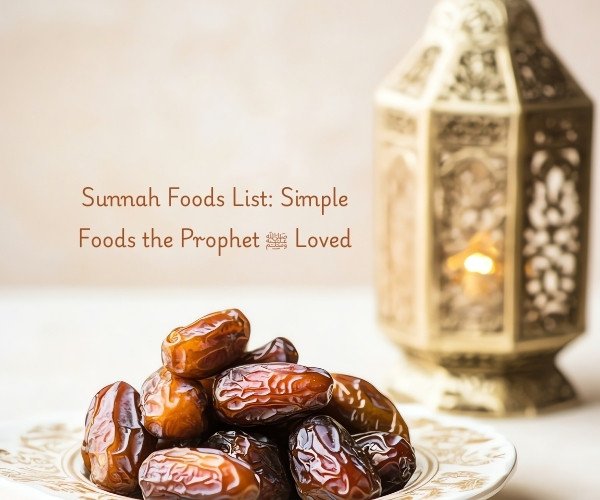
 The Sunnah shows Muslims how to live with balance and simplicity. Food was part of the Prophet’s ﷺ daily life, not luxury or excess. This Sunnah foods list highlights simple foods connected to the practice and lifestyle of the Prophet ﷺ.
Recommended: Foods Mentioned in the Quran: Full List with References
Sunnah Foods List
Dates
Often eaten and recommended, especially when breaking the fast.Water
Consumed with mindfulness and gratitude.Milk
A drink the Prophet ﷺ appreciated and accepted readily.Honey
Used as a natural food and household item.Olive Oil
Encouraged for eating and general use.Barley
Common in bread and meals of the Prophet’s ﷺ household.Vinegar
Praised as a simple and sufficient condiment.Pumpkin (Gourd)
The Prophet ﷺ showed fondness for it in food.Grapes
Eaten fresh and appreciated as a fruit.Meat (in moderation)
Consumed occasionally, without excess.Bread
Simple bread made from available grains.Soup and Broth
Light meals shared with family.Tharid (Bread with broth)
A well-known Sunnah dish combining bread and meat broth.Cheese
Consumed when available.Butter and Clarified Fat
Used in small amounts in food.Salt
Used simply, without excess seasoning.Vinegar with Bread
A complete and humble meal.Fresh Foods
The Sunnah favored natural, fresh items over stored luxury.Seasonal Fruits
Eaten according to availability.Shared Meals
Eating together was encouraged.Simple Portions
Meals were never excessive.Lawful Foods
Only halal and permissible foods were consumed.Home-Prepared Food
Food was usually made at home.Avoiding Waste
Food was respected and never wasted.Eating Slowly
Mindful and calm eating was part of character.Thankfulness After Eating
Gratitude was always expressed.Eating with the Right Hand
A consistent Sunnah practice.Beginning with the Name of Allah
Eating started with remembrance.Stopping Before Fullness
Moderation was maintained.Simple Ingredients
Meals were made with few, basic items.
Recommended: 10 Sunnah Foods Mentioned in the Hadith Muslims Should Know
Why It Is Important to Know the Sunnah Foods List
Knowing the Sunnah foods list helps Muslims apply Islam in daily life. Food becomes more than habit. It becomes awareness.
This knowledge helps Muslims:
Follow the Prophet ﷺ in practical ways
Avoid excess and food obsession
Appreciate simplicity and balance
Eat with intention and gratitude
Keep Islamic lifestyle values alive
The Sunnah does not promote restriction.
It promotes moderation.
Understanding Sunnah foods allows Muslims to make mindful choices without pressure.
Even simple meals become meaningful.
Recommended: Sunnah of Eating: Simple Habits Every Muslim Should Know
How to Use the Sunnah Foods List in Daily Life
The Sunnah foods list is not meant to complicate eating habits.
It is meant to guide choices with balance and awareness.
You can apply this list by:
Including one or two Sunnah foods in regular meals
Choosing simple foods over processed options
Eating seasonal and locally available items
Preparing meals at home when possible
Avoiding excess ingredients and heavy combinations
This list is flexible.
Not every food needs to be eaten every day.
The Sunnah teaches ease, not pressure.
Even small changes reflect intention.
Using the Sunnah foods list helps Muslims align daily routines with Islamic values.
Food becomes part of worship through mindfulness and gratitude.
Recommended: Healthy Habits in Islam for Daily Life: A Simple List for Muslims
Small Closing
This Sunnah foods list reflects balance, gratitude, and simplicity. Following it is not about copying meals, but about adopting Sunnah values in daily living.
Recommended: Difference Between Halal and Haram in Food, Lifestyle & Daily Life