
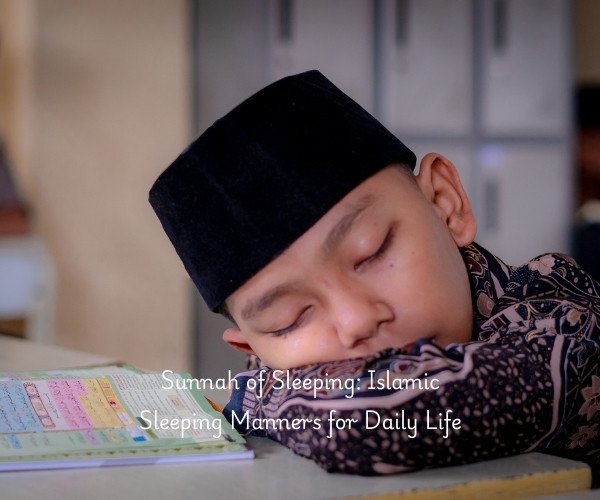
 Sleeping in Islam is not just rest. It is an act of worship when done with the right intention. The Sunnah of sleeping teaches Muslims simple habits for cleanliness, mindfulness, and remembrance of Allah before sleep. This guide lists the authentic Sunnah sleeping practices every Muslim can follow daily.
Recommended: Sunnah Morning Routine: 20 Prophetic Morning Habits for Muslims
Sunnah of Sleeping in Islam (Practical List)
Make the intention to sleep to gain strength for worship.
Intention turns rest into reward.Sleep early when possible.
The Prophet ﷺ disliked unnecessary late-night talk (Bukhari 568).Perform wudu before sleeping.
A Sunnah reported by Al-Bara ibn ‘Azib (Bukhari 247, Muslim 2710).Sleep on the right side.
This was the regular practice of the Prophet ﷺ (Bukhari 6314).Place the right hand under the cheek.
Reported in Abu Dawood (5047).Dust or shake the bed before lying down.
Taught by the Prophet ﷺ for cleanliness (Bukhari 6320).Recite Ayat al-Kursi before sleeping.
Protection until morning (Bukhari 2311).Recite Surah Al-Ikhlas, Al-Falaq, and An-Nas.
Blow into the hands and wipe over the body (Bukhari 5017).Say the Sunnah dua before sleep.
“Bismika Allahumma amutu wa ahya” (Bukhari 6324).Sleep in a state of remembrance, not distraction.
Dhikr before sleep is encouraged.Avoid sleeping on the stomach.
The Prophet ﷺ disliked this position (Abu Dawood 5040).Keep the sleeping place clean and simple.
Simplicity was part of the Prophet’s lifestyle.Turn off lamps or flames before sleeping.
For safety and mindfulness (Bukhari 6294).Do not sleep with full stomach discomfort.
Moderation aligns with Islamic manners.Avoid excessive luxury in bedding.
The Prophet ﷺ slept on simple bedding (Bukhari 6456).Make forgiveness part of bedtime routine.
Clean heart, peaceful sleep.Sleep after ‘Isha prayer when possible.
A balanced Islamic routine.Keep privacy and modesty while sleeping.
Part of Islamic adab.Wake with gratitude to Allah.
“Alhamdulillah alladhi ahyana…” (Bukhari 6312).Avoid habits that disturb others’ sleep.
Islam values consideration.
Recommended: Etiquette of Eating in Islam: Sunnah Manners You Should Know
Why the Sunnah of Sleeping Is Important
Knowing the Sunnah of sleeping helps Muslims bring worship into daily routines.
These habits encourage discipline, remembrance, and balance.
They also protect modesty, cleanliness, and intention in private moments.
Following Sunnah sleep practices connects faith with everyday life naturally.
Recommended: Healthy Habits in Islam for Daily Life: A Simple List for Muslims
Common Mistakes to Avoid While Sleeping
Sleeping without any remembrance of Allah
Ignoring cleanliness of the sleeping place
Staying awake without purpose
Following habits that contradict Sunnah knowingly
Awareness helps improvement, not perfection.
Recommended: Sunnah Foods List: Simple Foods the Prophet ﷺ Loved
Authentic Hadith About Sleeping in Islam
Sleeping on the right side
“When you go to bed, lie down on your right side.”
— Sahih al-Bukhari 6314Wudu before sleeping
“Perform wudu as you do for prayer.”
— Sahih al-Bukhari 247Ayat al-Kursi protection
“You will have a protector from Allah.”
— Sahih al-Bukhari 2311Dusting the bed
“He should dust his bed with the inside of his garment.”
— Sahih al-Bukhari 6320Dua before sleep
“In Your name I die and I live.”
— Sahih al-Bukhari 6324
Recommended: 10 Sunnah Foods Mentioned in the Hadith Muslims Should Know
Simple Closing Thought
The Sunnah of sleeping turns rest into remembrance.
Small habits, done consistently, build a mindful Islamic lifestyle. End your day the Sunnah way—and wake up with gratitude.
Recommended: Sunnah of Eating: Simple Habits Every Muslim Should Know