
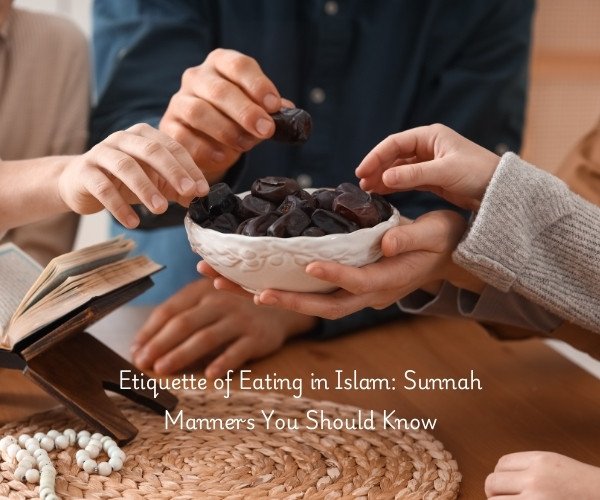
 Eating in Islam is more than satisfying hunger. It is a daily act guided by manners, intention, and gratitude. The etiquette of eating in Islam, taught by Prophet Muhammad ﷺ, helps Muslims eat with discipline and remembrance. This guide shares practical Islamic eating etiquette that is easy to follow in daily life.
Recommended: Sunnah Morning Routine: 20 Prophetic Morning Habits for Muslims
Etiquette of Eating in Islam (Sunnah-Based List)
Make the intention to eat for strength and worship.
Intention gives reward to daily actions.Eat only halal and lawful food.
Purity of food matters in Islam (Qur’an 2:168).Wash hands before eating.
Cleanliness is part of Islamic manners.Sit down while eating.
The Prophet ﷺ generally ate while sitting (Muslim 2024).Begin with the name of Allah.
Say “Bismillah” before eating (Bukhari 5376).Eat with the right hand.
The Prophet ﷺ commanded this clearly (Muslim 2020).Eat from what is nearest to you.
Taught to Umar ibn Abi Salamah (Bukhari 5376).Take small bites.
Avoid haste and greed while eating.Eat calmly and without rushing.
Moderation reflects good character.Do not criticize food.
The Prophet ﷺ never criticized food (Bukhari 5409).Avoid overeating.
Islam encourages balance and moderation.Eat together when possible.
Barakah increases in sharing (Abu Dawood 3764).Avoid wasting food.
Waste is disliked in Islam (Qur’an 7:31).Pick up fallen food if clean.
Remove harm and eat it (Muslim 2033).Do not eat while lying down.
The Prophet ﷺ disliked this posture (Bukhari 5399).Do not blow into food or drink.
This is discouraged in Sunnah (Tirmidhi 1887).Drink in small sips.
The Prophet ﷺ drank in three breaths (Muslim 2028).Sit while drinking.
This was the common Sunnah practice.Share food with others.
Feeding others is highly rewarded.Thank Allah after eating.
Gratitude completes the act (Muslim 2734).
Recommended: Sunnah of Sleeping: Islamic Sleeping Manners for Daily Life
Why Knowing the Etiquette of Eating in Islam Is Important
Learning the etiquette of eating in Islam helps Muslims turn daily meals into worship. These manners build discipline, humility, and gratitude.
They also protect against excess and carelessness. Knowing Sunnah etiquette keeps Islamic values alive in everyday life.
Recommended: Healthy Habits in Islam for Daily Life: A Simple List for Muslims
Common Mistakes While Eating
Eating without remembering Allah
Using the left hand knowingly
Wasting food unnecessarily
Criticizing what is served
Correcting habits starts with awareness.
Recommended: Sunnah Foods for Ramadan: A Simple Daily Guide for You
Authentic Hadith About Eating Etiquette
Saying Bismillah and eating properly
“Mention the name of Allah, eat with your right hand, and eat from what is nearest to you.”
— Sahih al-Bukhari 5376, Sahih Muslim 2022Not criticizing food
“If he liked it, he ate it; if not, he left it.”
— Sahih al-Bukhari 5409Eating posture
“I do not eat while reclining.”
— Sahih al-Bukhari 5399Picking up fallen food
“Let him remove harm and eat it.”
— Sahih Muslim 2033Gratitude after eating
“Allah is pleased with His servant who praises Him after eating.”
— Sahih Muslim 2734
Simple Islamic Eating Etiquette Checklist
Say Bismillah
Eat with right hand
Eat moderately
Avoid waste
Thank Allah afterward
Small habits bring lasting reward.
Small Closing Thought
The etiquette of eating in Islam brings mindfulness to every meal. Following the Sunnah of Prophet Muhammad ﷺ keeps daily life rooted in faith. Eat with intention, gratitude, and balance.