
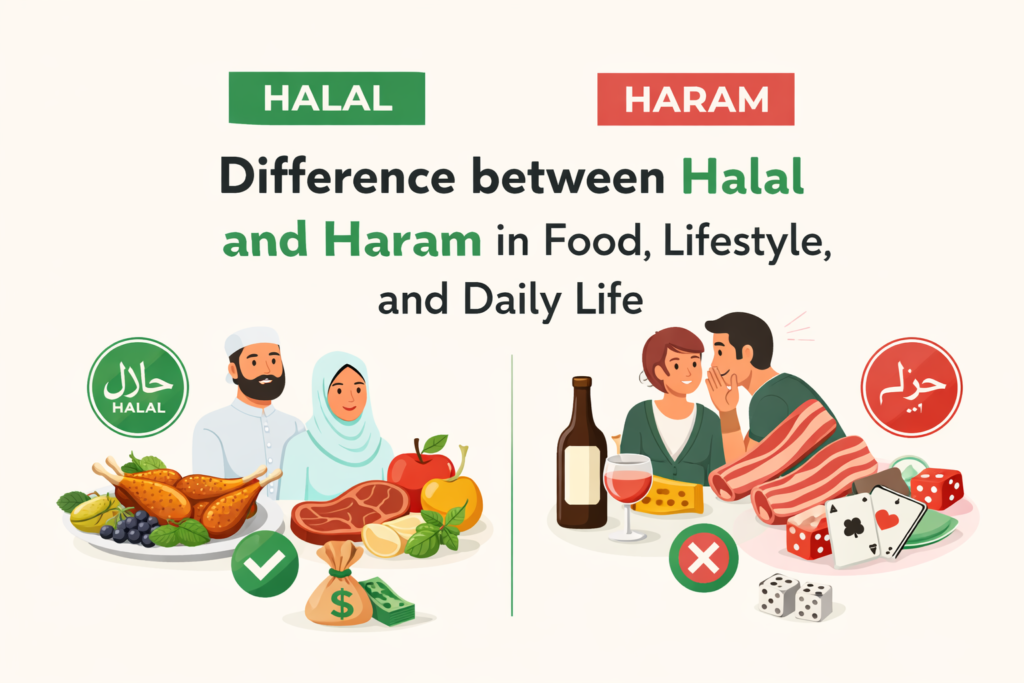
Islam is a complete way of life. Not only does it guide Muslims in worship, but it also shapes daily habits, food choices, lifestyle, and behavior. Two very important concepts that shape a Muslim’s life are halal and haram, helping believers understand what is allowed and what is forbidden according to Allah’s commands.
Understanding halal and haram helps Muslims live a pure, balanced, spiritually healthy life. This article explains these concepts clearly, focusing on food, lifestyle, and daily actions.
Recommended: Sunnah Foods for Ramadan: A Simple Daily Guide for You
Halal and Haram meaning
The word halal means permissible or lawful. Anything that Allah has allowed for Muslims to do, eat, or use is considered halal.
The word haram means forbidden or unlawful. Anything that Allah has clearly prohibited is haram and should be avoided.
These rules are not meant to make life difficult; rather, they protect human health, character, and faith. By choosing halal, people receive blessings, whereas haram brings harm to the soul and society.
What is halal and haram in Islam?
In Islam, halal and haram are defined by the Quran and the teachings of the Prophet Muhammad ﷺ. Muslims do not decide halal and haram based on personal opinion or culture. Only Allah has the authority to declare something lawful or unlawful.
Examples of halal in Islam
- Halal food and drinks
- Honest earning
- Kind speech and good manners
- Modest clothing
- Respecting parents and others
Examples of haram in Islam
- Alcohol and intoxicants
- Pork and its by-products
- Cheating, lying, and stealing
- Backbiting and spreading hatred
- Unjust behavior
Muslims are encouraged to choose halal in all aspects of life: food, intentions, actions, and lifestyle.
The difference between halal and haram in food
Food is one of the most visible areas where halal and haram matter. What we eat affects our bodies, minds, and souls.
Halal food
Halal food includes:
- Fruits, vegetables, grains
- Milk and dairy products
- Halal-slaughtered meat
- Seafood (according to most scholars)
Food must also be:
- Clean and hygienic
- Earned through halal income
- Prepared without haram ingredients
Haram food
Haram food includes:
- Pork and pork products
- Alcohol and intoxicants
- Meat not slaughtered in Allah’s name.
- Blood and dead animals
Islamic guidance about food protects health and encourages discipline and gratitude. The Quran reminds believers to eat with awareness and thankfulness.
halal and haram food list in islam
Below is a simple overview to make understanding easier.
Common halal foods
- Rice, wheat, and grains
- Fruits and vegetables
- Eggs and honey
- Halal chicken, beef, and lamb
- Fish and seafood
Common haram foods
- Pork and bacon
- Alcoholic drinks
- Gelatin from non-halal animals
- Animals slaughtered improperly
- Food mixed with intoxicants.
Muslims are encouraged to carefully check ingredient lists and be mindful of what they consume.
The difference between halal and haram in lifestyle
Halal and haram do not only apply to food. These concepts guide how Muslims live their daily lives, influencing a wide range of behaviors and decisions.
Halal lifestyle
A halal lifestyle includes:
- Honest work and earning
- Respectful relationships
- Modesty in dress and behavior
- Helping others
- Cleanliness and good character
Living halal brings peace of mind and strengthens faith. When people choose a halal lifestyle, they nurture both their spirit and character.
Haram lifestyle choices
Haram lifestyle actions include:
- Gambling and interest-based earnings
- Immoral relationships
- Substance abuse
- Oppression and injustice
By avoiding haram, individuals and society are protected from harm and corruption. This guidance aims to preserve well-being on many levels.
The difference between halal and haram in daily life
Everyday actions also fall into the categories of halal and haram.
Halal daily actions
- Speaking truthfully
- Keeping promises
- Being patient and kind
- Using time productively
Haram daily actions
- Lying and cheating
- Gossip and backbiting
- Disrespecting parents
- Causing harm to others
Islam teaches that even minor daily choices are important. Every action is noted and contributes to a person’s spiritual record.
Why following halal and avoiding haram is important.
Following halal and avoiding haram:
- Strengthens faith
- Bring Allah’s blessings.
- Protects physical and mental health
- Builds good character
- Creates a just society
When Muslims choose halal, they show obedience to Allah and care for their spiritual well-being.
Common misunderstandings about halal and haram
Some people think:
- Halal and haram are only about food.
- These rules are outdated.
- They restrict freedom
In reality, halal and haram represent discipline, balance, and protection. These principles help people live responsibly and ethically, shaping personal and social behavior.
Conclusion
The difference between halal and haram in food, lifestyle, and daily life is a core part of Islamic teachings, as reflected in the Foods Mentioned in the Quran. Halal represents purity, goodness, and obedience to Allah, while haram represents actions and items that cause harm to individuals and society. By choosing halal and avoiding haram, Muslims protect their faith, health, and character. These guidelines are not burdens but blessings that help create a peaceful and meaningful life.