
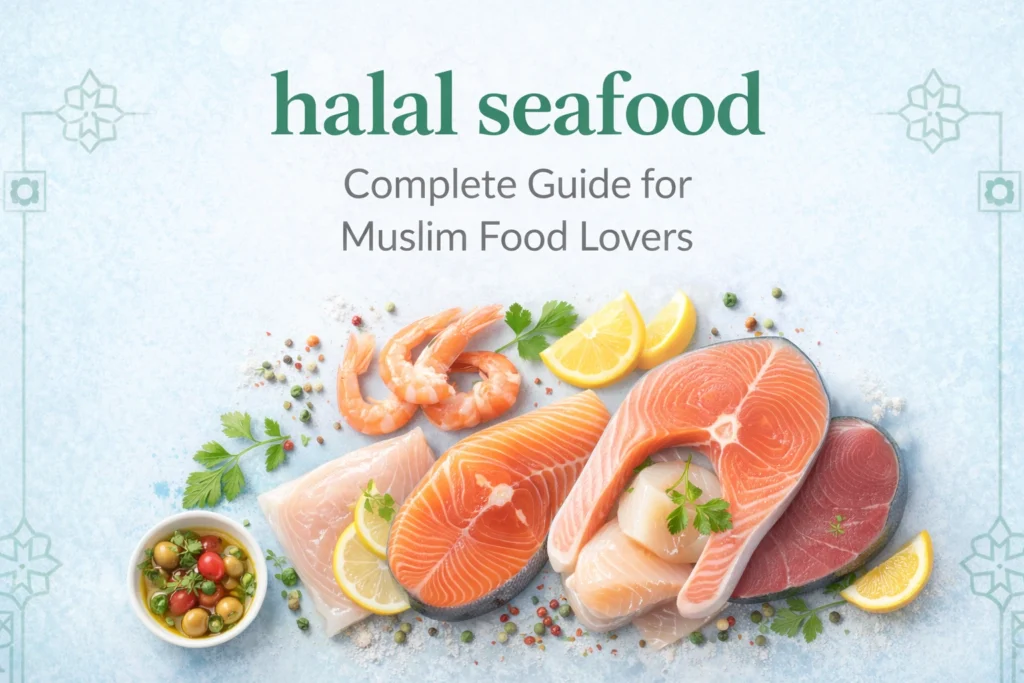
Seafood is loved worldwide. From grilled fish to fried shrimp, it is tasty, healthy, and easy to cook. But for Muslims, an important question always comes first: Is it halal? Understanding halal seafood helps Muslims make confident food choices while staying within Islamic guidelines.
In this complete guide, we will explain what halal seafood is, what Islamic scholars say about it, and provide a clear list of halal and haram seafood. We will also answer common questions at the end.
What Does Halal Seafood Mean?
In Islam, halal means permissible and lawful. Halal food is permissible for Muslims to eat. The opposite of halal is haram, which means forbidden.
When it comes to seafood, Islamic scholars hold slightly different opinions based on interpretations of the Qur’an and Hadith. However, seafood is generally more permissible compared to land animals, which require proper slaughter.
Allah says in the Qur’an that the food from the sea is lawful and a provision for you. Because of this verse, many scholars consider most seafood halal.
Islamic Views on Seafood
There are different opinions among Islamic schools of thought:
- Many scholars believe all seafood is halal, including fish, shrimp, crab, and lobster.
- Some scholars, especially in the Hanafi school, believe only fish are fully halal, and other sea creatures are either disliked (makruh) or not allowed.
Because of these differences, Muslims often follow the opinion of their trusted scholars or school of thought.
Why Seafood Is Often Considered Halal
Sea animals do not need to be slaughtered in a specific way like cows or chickens. If a fish is taken from the water alive or found dead without decay, it is generally considered halal.
The Prophet Muhammad (peace be upon him) allowed the eating of seafood and described the sea as pure and its dead as lawful. This makes halal seafood easier to consume compared to other meats.
Health Benefits of Halal Seafood
Besides being permissible, seafood is also very healthy.
- Rich in protein
- High in omega-3 fatty acids
- Good for heart health
- Supports brain function
- Low in unhealthy fats
Including halal seafood in your diet can support overall health while adhering to Islamic teachings.
Halal and Haram Seafood List
Below is a general list based on common scholarly opinions. Always check with your local scholar if you are unsure.
Halal Seafood List
- Salmon
- Tuna
- Cod
- Tilapia
- Sardines
- Mackerel
- Trout
- Halibut
- Anchovies
- Catfish
- Shrimp (permitted by many scholars)
- Prawns
- Crab (permitted by many scholars)
- Lobster (permitted by many scholars)
- Mussels (according to many scholars)
- Oysters
- Clams
- Squid
- Octopus
- Sea bass
These are generally accepted as halal seafood by most scholars, especially in Shafi’i, Maliki, and Hanbali schools.
Haram or Disputed Seafood List
Some sea creatures are considered haram or disliked according to certain scholars:
- Frog (explicitly forbidden in Hadith)
- Crocodile
- Alligator
- Sea snake
- Shark (disputed)
- Eel (disputed in some opinions)
- Crab (disputed in the Hanafi school)
- Lobster (disputed in the Hanafi school)
- Squid (disputed)
- Octopus (disputed)
- Seal
- Sea lion
- Otter
- Turtle
- Dolphin
Animals that live both on land and water (amphibians) are generally considered haram by many scholars.
Important Rules About Halal Seafood
Even if seafood itself is halal, the way it is prepared matters.
1. Avoid Alcohol-Based Sauces
Some seafood dishes are marinated in wine or other alcoholic beverages. This makes the dish haram.
2. Cross-Contamination
If halal seafood is cooked on the same grill as pork without cleaning the grill, it may become contaminated.
3. Halal Certification
When buying packaged seafood, check for halal certification, especially if it is processed or flavored.
Popular Halal Seafood Dishes Around the World
Many Muslim countries have delicious seafood recipes:
- Grilled fish with spices in the Middle East
- Shrimp biryani in South Asia
- Seafood tagine in Morocco
- Fried fish with rice in Indonesia
- Turkish baked sea bass
These dishes show how halal seafood can be enjoyed in different cultures.
Tips for Buying Halal Seafood
Here are some simple tips:
- Buy from trusted fish markets.
- Ask about ingredients in sauces and marinades.
- Check labels for additives.
- Avoid doubtful items if unsure.
The Prophet (peace be upon him) advised Muslims to avoid doubtful matters. If something feels questionable, it is better to avoid it.
Can Muslims Eat Seafood in Non-Muslim Countries?
Many wonder how these rules apply when traveling or living abroad. Here’s what to consider:
Yes, in most cases, seafood is safe because it does not require Islamic slaughter. However, Muslims should still ensure:
- No haram ingredients are added.
- It is not cooked with pork or alcohol.
- It is clean and safe to eat.
Always ask the restaurant staff if you are unsure.
Conclusion
Halal seafood offers Muslims a wide variety of healthy, delicious options. While there are slight differences among scholars, fish and most sea creatures are generally considered halal. Following a reliable health guide can also help you choose seafood that is not only permissible but also fresh, nutritious, and safe to consume.
Understanding what is permissible helps Muslims eat with confidence and peace of mind. When in doubt, follow your trusted scholar and avoid doubtful foods.
Seafood is a blessing from Allah. By learning about halal seafood, you can enjoy it responsibly while staying true to your faith.
Frequently Asked Questions
1. Is all seafood automatically halal?
Most scholars say yes, especially when it comes to fish. However, some schools of thought limit halal seafood mainly to fish only.
2. Is shrimp halal?
According to many scholars, shrimp is halal. In the Hanafi school, it is considered permissible by many modern scholars as well.
3. Is crab halal?
Crab is halal according to many scholars, but is considered disliked or disputed in the Hanafi school.
4. Can Muslims eat sushi?
Yes, if it contains halal seafood and no alcohol-based ingredients or cross-contamination with pork.
5. Are frogs halal?
No. Frogs are forbidden based on the Hadith.
6. Does seafood need halal slaughter?
No. Seafood does not require the same slaughter method as land animals.
7. What should I do if I am unsure about a seafood item?
It is better to avoid doubtful food and consult a trusted scholar.