
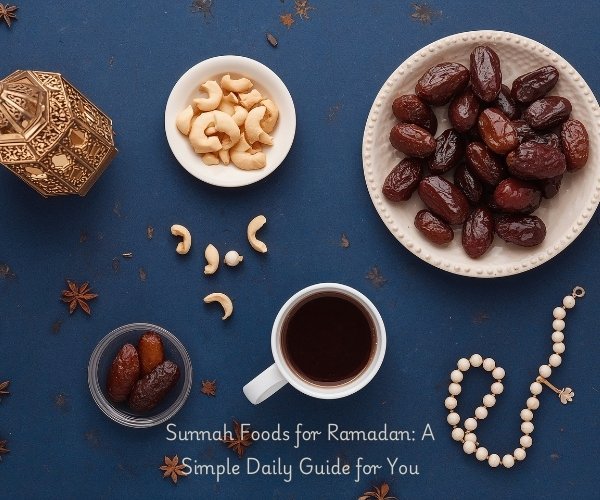
Sunnah foods for Ramadan bring simplicity back to your fasting routine. They help you eat with intention, not excess. For Muslims living in the US, UK, Canada, and Europe, these foods are practical and easy to include. Use this list to build a balanced, faith-centered Ramadan table.
Recommended: Sunnah Foods List: Simple Foods the Prophet ﷺ Loved
Sunnah Foods for Ramadan to Break Your Fast
Break your fast with dates, following the Sunnah.
Keep quality dates like Medjool or Ajwa at home all Ramadan.
Eat dates in odd numbers when possible.
Drink water immediately after your dates.
Keep a glass of water ready before Maghrib.
Choose milk as a light Sunnah-inspired drink at iftar.
Warm milk with a little honey for a simple evening option.
Use honey instead of processed sugar in drinks.
Add honey to toast or oatmeal at suhoor.
Keep extra virgin olive oil in your kitchen.
Dip bread in olive oil as a light starter.
Add olives to your iftar plate.
Use vinegar lightly in salads, as it was praised in the Sunnah.
Keep fresh or dried figs as a Sunnah food option.
Add grapes to your plate for a natural sweet finish.
Recommended: Foods Mentioned in the Quran: Full List with References
Sunnah-Inspired Suhoor Ideas
Eat suhoor daily, even if it is small.
Prepare dates and water the night before workdays.
Make simple barley porridge (talbina-style) for suhoor.
Add olive oil to eggs or toast in the morning.
Keep suhoor light but filling.
Avoid skipping suhoor due to late nights.
Choose whole foods over packaged snacks.
Add fruit like figs or grapes for natural sweetness.
Drink water calmly before Fajr.
Make your intention before eating.
Recommended: 10 Sunnah Foods Mentioned in the Hadith Muslims Should Know
Building a Sunnah-Based Iftar Routine
Start with Sunnah foods for Ramadan before heavier dishes.
Sit down properly to eat.
Avoid rushing your meal after a long fast.
Keep portions moderate.
Stop before feeling overly full.
Thank Allah after finishing your meal.
Share dates with family or friends.
Bring extra dates to the masjid.
Keep a small container of dates in your car.
Avoid turning every iftar into a feast.
Recommended: Sunnah of Eating: Simple Habits Every Muslim Should Know
Everyday Additions That Fit Western Life
Keep frozen lentil soup for busy weekdays.
Pack dates in your office bag.
Keep water with you if breaking fast at work.
Choose simple salads with olive oil and vinegar.
Add cucumbers or fresh vegetables to your plate.
Keep your Ramadan grocery list focused.
Avoid food waste.
Prepare iftar ingredients before leaving for work.
Use honey in tea instead of refined sugar.
Keep your fridge stocked with whole, simple foods.
Recommended: Healthy Habits in Islam for Daily Life: A Simple List for Muslims
Practical Tips for Sunnah Foods for Ramadan
Buy your Ramadan staples before the month begins.
Keep dates visible on the kitchen counter.
Prep suhoor before sleeping to avoid stress.
Use smaller plates to manage portions.
Keep your iftar table uncluttered.
Set a reminder for suhoor if you sleep late.
Carry travel-size date packs during long commutes.
Choose quality over quantity at the grocery store.
Rotate Sunnah foods to avoid monotony.
Keep meals calm and distraction-free.
Recommended: Difference Between Halal and Haram in Food, Lifestyle & Daily Life
Why Sunnah Foods for Ramadan Are Important
They connect your daily eating to the Prophetic example.
They encourage moderation instead of excess.
They simplify meal planning during busy schedules.
They help you avoid cultural overcomplication.
They remind you that Ramadan is about worship, not feasting.
They support gratitude for simple provisions.
They make fasting feel spiritually grounded.
They align your routine with Islamic lifestyle values.
They create consistency between faith and daily habits.
They bring intention back to every meal.
Small Closing
Sunnah foods for Ramadan are not complicated. They are simple, intentional, and easy to follow in Western life. Keep your table light, your habits steady, and your focus on worship.
Recommended: Islamic Habits for Good Health: 30 Simple but Powerful Habits